

The example was removed from the SDK repository, so the link opens the last revision that carried it. For maintained plugin samples, see the official plugin examples.
Group Definition
An Endpoint group is a collection of multiple Endpoints. When you create a new Endpoint in a Dify plugin, you may need to fill in the following configuration.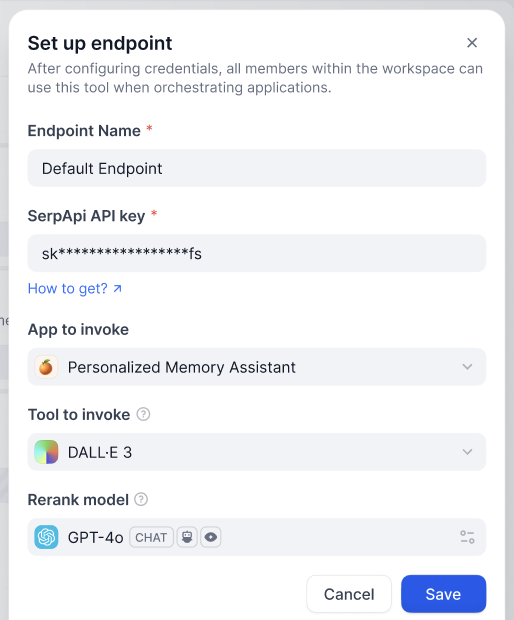
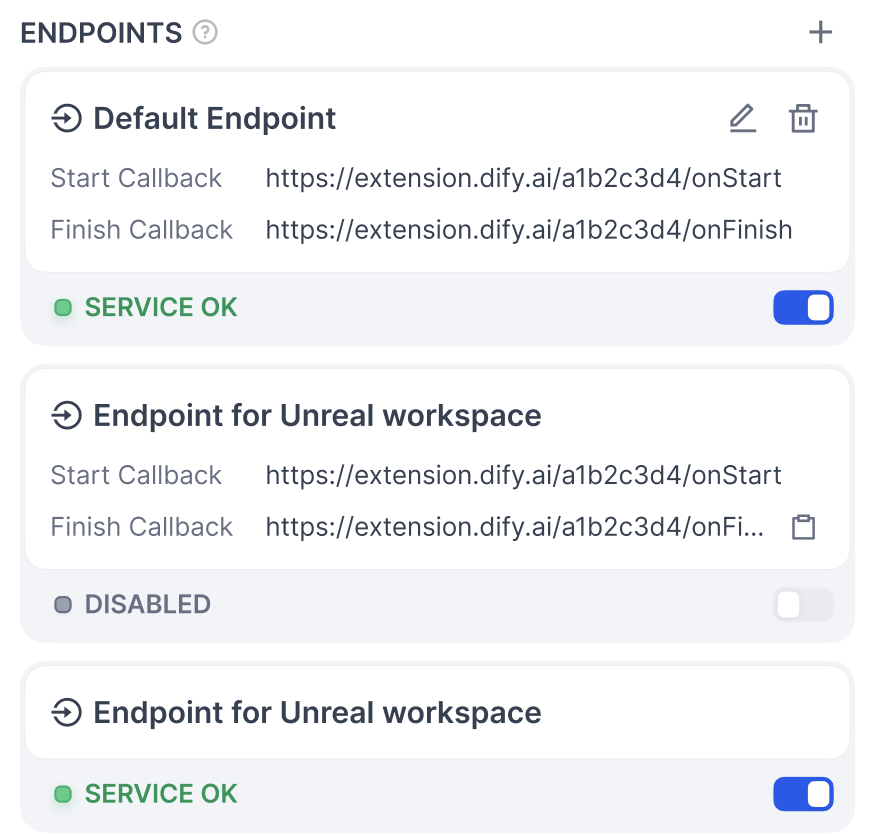
Structure
settings(map[string] ProviderConfig): Endpoint configuration definition.endpoints(list[string], required): Points to the specificendpointinterface definitions.
Interface Definition
path(string): Follows the Werkzeug interface standard.method(string): Interface method; supports onlyHEAD,GET,POST,PUT,DELETE, andOPTIONS.extra(object): Configuration information beyond the basic details.python(object)source(string): The source code that implements this interface.
Interface Implementation
Implement a subclass ofdify_plugin.Endpoint and its _invoke method.
- Input parameters
r(Request): TheRequestobject fromwerkzeug.values(Mapping): Path parameters parsed from the path.settings(Mapping): Configuration information for this Endpoint.
- Return
- A
Responseobject fromwerkzeug; streaming responses are supported. - Returning a string directly is not supported.
- A
Notes
- Endpoints are only instantiated when the plugin is called; they are not long-running services.
- Pay attention to security when developing Endpoints, and avoid executing dangerous operations.
- Endpoints can handle webhook callbacks or provide interfaces for other systems to connect to.
Related Resources
- Basic Concepts of Plugin Development: The overall architecture of plugin development.
- Neko Cat Example: An example of extension plugin development.
- General Specifications Definition: Common structures like ProviderConfig.
- Develop a Slack Bot Plugin Example: Another plugin development example.
- Getting Started with Plugin Development: Develop a plugin from scratch.
- Reverse Invocation of Dify Services: Use the reverse invocation feature.